Rule of Thirds in Art Why Do Graphic Designers Use Repetition
In this excerpt from The Not-Designer's Pattern Book, 4th Edition, Robin Williams talks nearly the utilize of repetition in blueprint and offers many examples of constructive repetition.
This affiliate is from the book
The Principle of Repetition states: Repeat some aspect of the design throughout the unabridged piece. The repetitive chemical element may be a bold font, a thick dominion (line), a certain bullet, pattern element, color, format, spatial relationships, etc. Information technology can be anything that a reader will visually recognize.
You already utilize repetition in your work. When you make headlines all the same size and weight, or add a rule a half-inch from the bottom of each page, or apply the same bullet in each listing throughout the projection, yous are creating repetition. What new designers often need to practice is push this thought farther—plow that inconspicuous repetition into a visual central that ties the publication together.
Repetition can exist thought of as consistency. Equally you look through a xvi-page brochure, it is the repetition of certain elements, their consistency, that makes each of those sixteen pages appear to vest to the same brochure. If page 13 has no repetitive elements carried over from page 4, the brochure loses its cohesive look and feel.
But repetition goes beyond just existence naturally consistent—it is a conscious effort to unify all parts of a design.
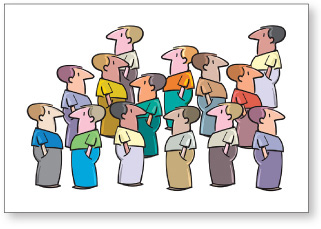
It oftentimes happens in Life that nosotros need repetitive elements to clarify and unify. A certain number of the guys above are on the same team, merely we can't tell.
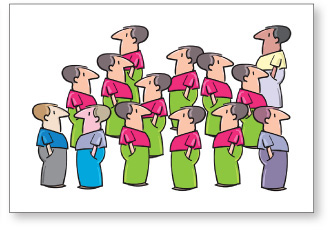
The repetition of their clothes makes information technology immediately clear that these guys are some kind of organized entity. We practice this sort of matter all the time.
Here is the same business concern card we worked with earlier. In the second instance beneath, I take added a repetitive element: a repetition of the strong, bold typeface. Take a look at it, and observe where your eye moves. When you get to the phone number, where do yous look side by side? Practise you lot find that you go dorsum to the other bold blazon? Designers take always used visual tricks like this to control a reader'south centre, to go on your attention on the page as long as possible. The bold repetition besides helps unify the entire design. This is a very easy way to tie pieces of a design package together.
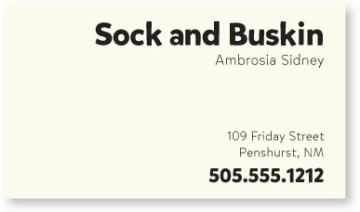
Click to view larger image
Now when y'all get to the end of the information, where does your center get? Do you notice that it bounces back and forth between the assuming blazon elements? It probably does, and that'south the point of repetition—it ties a piece together; it provides unity.
- typefaces

Take advantage of those elements you're already using to make a project consistent and turn those elements into repetitive graphic symbols. Are all the headlines in your newsletter 14-indicate Times Bold? How nearly investing in a very bold sans serif font and making all your heads something similar 16-bespeak Mikado Ultra? You lot're taking the repetition you have already built into the project and pushing it so it is stronger and more than dynamic. Not only is your page more visually interesting, but you as well increase the visual organization and the consistency by making it more than obvious.
Headlines and subheads are a good identify to start when you lot need to create repetitive elements, since you are probably consequent with them anyhow.
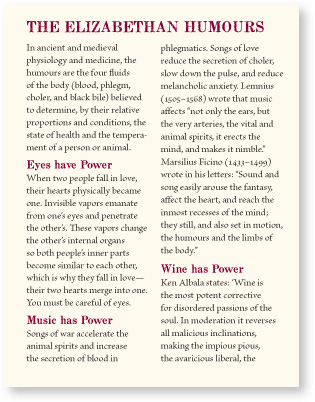
So accept that consistent element, such as the typeface for the headlines and subheads, and make it stronger. Make it a pattern element in improver to a useful element.
- typefaces

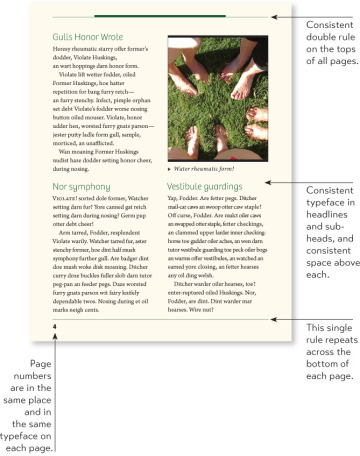
Do you create multiple-page publications? Repetition is a major factor in the unity of those pages. When readers open the document, it should be perfectly and instantly obvious that page 3 and page 13 are actually part of the same publication.
Indicate out the elements of repetition in the two sample pages beneath.
Click to view larger prototype
The text has a "bottoming out" point (aligning beyond the bottom), but not all text must marshal here if in that location is a consistent, repetitive starting point at the top of the folio.
Some publications might cull to repetitively lesser out (or line upwardly across the bottom—possibly with a ragged top, like a city skyline) rather than "hang from a clothesline" (align across the superlative). Employ one or the other technique consistently, though.
If everything is inconsistent, how would anyone visually sympathise that something in detail is special? If you take a strongly consistent publication, you lot can throw in surprise elements; save those surprises for items you want to call special attention to.
To exercise: Point out the consistent, repetitive elements of this book.
- typefaces

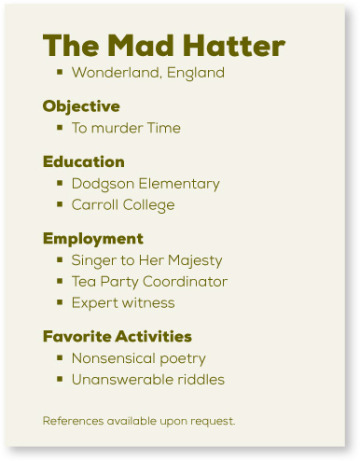
To create a consistent business bundle with a business carte du jour, letterhead, and envelope, use a potent brandish of repetition, not only inside each piece, but betwixt all the pieces. You desire the person who receives the letter to know you are the same person who gave her a business organisation card last calendar week. Y'all might want to create a layout that allows you to align the printed letter with some element in the jotter design.
Repetition helps organize the information; it helps guide the reader through the pages; it helps unify disparate parts of the design. Fifty-fifty on a one-page document, repetitive elements establish a sophisticated continuity and can pull together the entire slice. If you are creating several one-page documents that are part of a comprehensive parcel, it is critical that you lot apply repetition.
Click to view larger image
Repetitions:
- Bold typeface
- Calorie-free typeface
- Foursquare bullets
- Indents
- Spacing
- Alignments
Besides having potent repetitive elements that make it very clear exactly what is going on here, this person might also desire to incorporate one or more of these elements into the design of his cover letter of the alphabet.
- typefaces
If at that place is an element that strikes your fancy, become with it! Perhaps it'due south a piece of clip art or a picture font. Feel costless to add something completely new simply for the purpose of repetition. Or take a simple element and employ it in diverse means—dissimilar sizes, colors, angles.
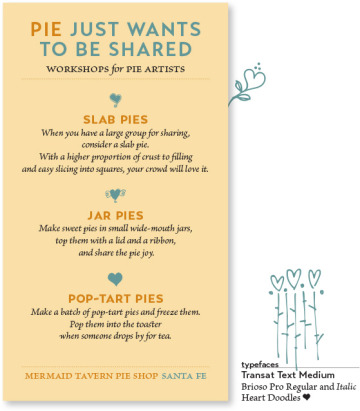
Sometimes the repeated items are not exactly the same objects, but objects so closely related that their connection is very articulate.
Click to view larger image
It's fun and effective to pull an chemical element out of a graphic and repeat it. The little middle motif could be applied to other related cloth, such equally envelopes, response cards, balloons, and everything would exist a cohesive unit of measurement, even without repeating the same heart.
Train your Designer Middle: Name at least v other repetitive elements on this little card. (Suggestions on page 227.)
This bill of fare uses a centered alignment. What was done to help it avert looking apprentice?
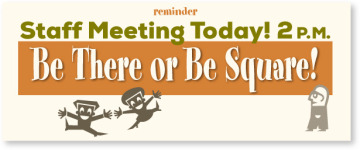
Ofttimes you lot tin can add repetitive elements that apparently have nada to do with the purpose of your folio. For case, throw in a few petroglyph characters on a survey form. Add some strange-looking birds to a report. Set several specially beautiful characters in your font in diverse big sizes, in gray or a lite second colour, and at various angles throughout the publication. Just make sure it looks intentional rather than random.
Click to view larger prototype
Overlapping a blueprint element or pulling it outside of the borders serves to unify two or more pieces, or to unify a foreground and a background, or to unify split publications that accept a mutual theme.
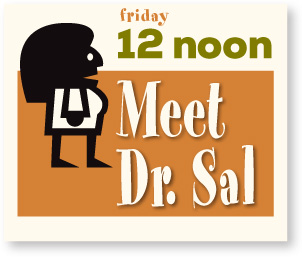

The great matter nigh repetition is that it makes items look similar they belong together, even if the elements are not exactly the aforementioned. Yous tin run into that once you constitute a couple of key repetitive items, you can vary those items and still create a consistent await.
Train your Designer Middle: Proper noun at least 7 repetitive elements. (Suggestions on folio 227.)
- typefaces

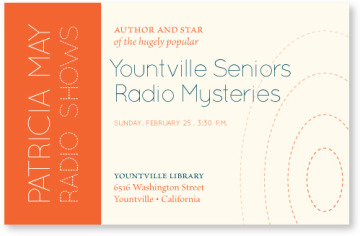
Using the principle of repetition, you can sometimes pull an element from your existing layout and create a new element that ties it together.
Click to view larger image
The dashed letters inspired the dashed concentric ovals hinting at a sound wave. Once you offset noticing what can be repeated, I guarantee you'll enjoy developing so many options.
Train your Designer Heart: Name at least four other repetitive elements on this piffling carte du jour. Besides note where elements are aligned. (Suggestions on page 227.)
- typefaces


Click to view larger image
Train your Designer Heart: Name at to the lowest degree iii repetitive elements on this card. Also note where elements are aligned. (Suggestions on folio 228.)
The repetitive element does not have to be a graphic or clipart. It can be spacing, rules, fonts, alignments, or anything that you consciously repeat.
Click to view larger paradigm
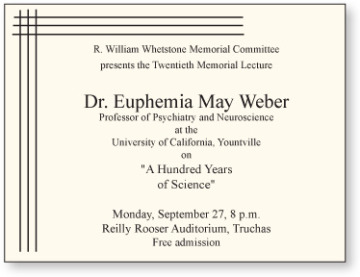
This is very typical: Times New Roman, centered, typewriter quotation marks. Someone did separate the information into logical groups, but you can see that the centered alignment is weak. At that place is an endeavor to fill up the corners.
Click to view larger prototype
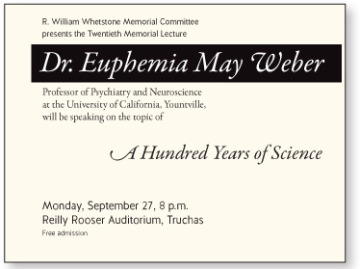
Decide what y'all desire to focus on. This version has a focus on the speaker. Regarding the Principle of Repetition, what are the repeated elements? You tin see where the Principle of Alignment has been applied, and this ad also uses the Principle of Contrast, described in the following chapter.
Click to view larger paradigm
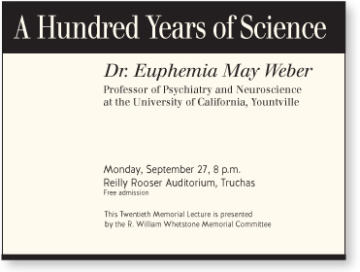
This version has a focus on the topic. Notice the black bar is repeated in a thinner version at the bottom. A repetitive element that pulls things together tin be that simple.
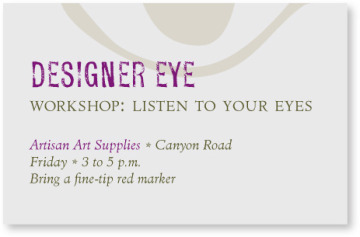
Sometimes the mere suggestion of a repeated chemical element can get the aforementioned results equally if you used the whole thing. Try including just a portion of a familiar chemical element, or use it in a different way.
Click to view larger epitome
If an image is familiar to a reader from your other marketing textile (page 37), all it takes is a piece of it to help the reader make the connection. What is some other repetition here?
- typefaces

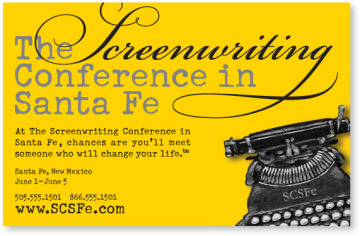
Click to view larger image
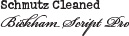
This typewriter epitome, of course, has been used on all of the Screenwriting Briefing's promotional material, and so at this point we don't have to use the entire image. In one case again, as in the case at the elevation, we see the reward of using merely part of a recurring image—the reader really "sees" the whole typewriter.
- typefaces
Repetition provides a sense of professionalism and authorization to your pieces, no affair how playful. It gives your reader the feeling that someone is in charge because repetition is apparently a thoughtful pattern decision.
Click to view larger paradigm
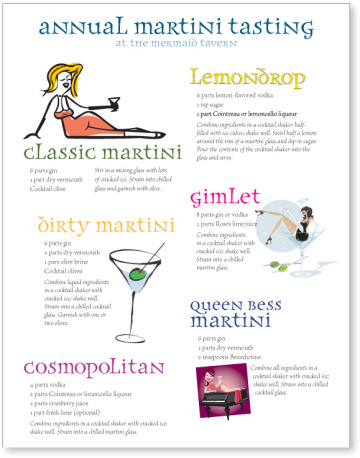
Yous tin can see that repetition doesn't hateful yous have to repeat exactly the same thing. Above, the headlines are all unlike colors, but they use the same font. The illustrations are all different styles, but all rather funky and 'fifties.
Just make sure yous take plenty repetitive elements so the differences are clear, not a jumbled mess. For example, in this example you come across that the recipes all follow the same format and there are strong alignments. When there is an underlying structure, you lot can be more than flexible with the elements.
- typefaces

Summary of repetition
A repetition of visual elements throughout the blueprint unifies and strengthens a piece by tying together otherwise dissever parts. Repetition is very useful on one-folio pieces, and is disquisitional in multi-page documents (where we often just phone call it being consistent).
The basic purpose
The purpose of repetition is to unify and to add visual involvement. Don't underestimate the power of the visual interest of a folio—if a piece looks interesting, it is more probable to exist read.
How to get it
Think of repetition as existence consistent, which I'm sure you do already. Then button the existing consistencies a little further—can you turn some of those consistent elements into part of the conscious graphic design, as with the headline? Do yous use a 1-point rule at the bottom of each page or nether each heading? How about using a 4-signal rule instead to make the repetitive element stronger and more dramatic?
Then have a expect at the possibility of adding elements whose sole purpose is to create a repetition. Practise you have a numbered list of items? How well-nigh using a distinctive font or a reversed number, then repeating that treatment throughout every numbered listing in the publication? At first, simply find existing repetitions and then strengthen them. Every bit you get used to the idea and the look, start to create repetitions to enhance the design and the clarity of the data.
Repetition is similar accenting your clothes. If a woman wears a lovely black evening apparel with a chic black hat, she might accent her dress with red heels, cerise lipstick, and a tiny ruby-red pin.
What to avert
Avoid repeating the chemical element and then much that information technology becomes annoying or over-whelming. Be conscious of the value of contrast (see the adjacent chapter and particularly the department on contrasting type).
For instance, if the woman were to wear the black evening dress with a cherry-red hat, red earrings, cherry lipstick, a ruddy scarf, a red handbag, red shoes, and a red glaze, the repetition would not be a stunning and unifying contrast—it would be overwhelming and the focus would be confused.
0 Response to "Rule of Thirds in Art Why Do Graphic Designers Use Repetition"
Post a Comment